
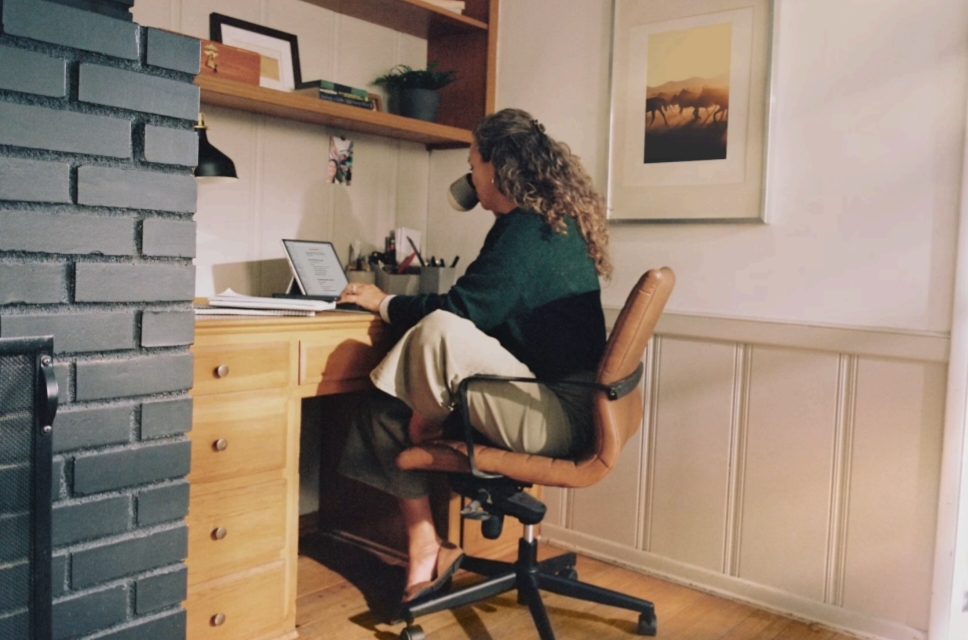
Young Workers Are Not Quitting the Office. They Want Control of the Week
The familiar story says young employees want to work alone from a laptop and never meet a colleague. The evidence says something more interesting. Remote work appeals because it gives people leverage over time, housing and concentration, while the office remains useful when it earns the journey.
That distinction explains why arguments about “home versus headquarters” feel stale. For many early-career workers, the real choice is whether every task must happen in the same building on the same schedule.
A Correction to the Fully Remote Story
Gallup’s 2025 research found that only 23% of remote-capable Gen Z employees preferred fully remote work. A much larger 71% preferred a hybrid arrangement, while fully on-site work was
the least popular option across generations. Young workers are not rejecting shared workplaces; they are rejecting attendance that has no clear purpose.
A useful office day might contain mentoring, difficult collaboration and informal introductions. A useful home day protects long stretches for writing, analysis or technical work. Hybrid work is attractive because it can assign each setting the job it does best.
What Does a Commute Cost?
A one-hour journey each way consumes ten hours in a five-day week before the employee has produced anything. Removing even two or three commutes returns time for sleep, exercise, care work or a second source of income. The benefit is especially visible to younger workers, who often have less control over where they can afford to live.
This is why work from home is not simply a comfort perk. It can expand the practical radius of a job without forcing someone to pay city-centre rent or surrender a large part of the week to transport.
Housing Turns Location Policy Into a Financial Decision
Deloitte’s 2026 global survey found that housing affordability and availability influence where Gen Z and millennials can work and build a life. More than half of both groups reported delaying major life decisions because of financial pressure. A remote option cannot solve housing shortages, but it can separate access to a good employer from access to one expensive postcode.
The trade-off is real. A cheaper home farther away may offer space for a desk, but weak broadband or an occasional long commute can erase part of the gain. Sensible remote jobs describe expected office days before hiring, allowing candidates to calculate the true cost.
A Break Should Have Edges
Autonomy works only when leisure remains a break instead of becoming a permanent browser tab. Someone following cricket betting in Bangladesh can use the dedicated page to see active fixtures, statistics, results and bet history without hopping between several feeds. Its coupon supports pre-match and live selections, which makes it easier to review a choice in one place. The practical remote-work rule is to open it during a scheduled pause, mute notifications while working and close the page when the break ends. That boundary protects concentration and makes the leisure activity deliberate rather than automatic.
One Job for Every Remote Tool
Remote work fails quickly when the software stack creates more checking than the office ever did. In the same way, the MelBet page separates pre-match sports from live events and gives cricket, football and tennis their own sections. Clear grouping matters because a short break
should not become a search exercise. The same design principle belongs in the workday: one place for decisions, one place for documents and an agreed channel for urgent questions. A tool earns its place when it closes a loop instead of adding another inbox.
The Retention Test
A randomized study of more than 1,600 Trip.com employees, published in Nature, tested a hybrid schedule with two days at home. The arrangement reduced attrition by one-third and did not damage performance grades or promotion rates. The retention effect was particularly strong among non-managers, women and employees with longer commutes.
That result matters because it measures behavior rather than intention. People may describe flexibility as desirable on a survey; staying with an employer is a costlier and more revealing choice.
When Flexibility Becomes a Negotiating Line
Pew Research Center reported in January 2025 that 50% of remote workers under 50 would be likely to leave if their ability to work from home disappeared, compared with 35% of older remote workers. The finding does not mean half would immediately resign. It does show that location policy now sits beside pay, management and progression when younger employees judge a role.
Employers can respond without promising an office-free future. Publish team days, protect focus time, train managers to evaluate output and ensure remote colleagues are not absent from promotion conversations. The strongest policy is neither “anywhere forever” nor “everyone back”; it is a credible agreement about where work happens and why.






পাঠকের মতামত